Fair ways to pick who goes first
A method is fair when every player has the same chance of going first and nobody can steer the result. Here are the common ones, how to run each properly and what to do about ties.
Roll dice: highest goes first
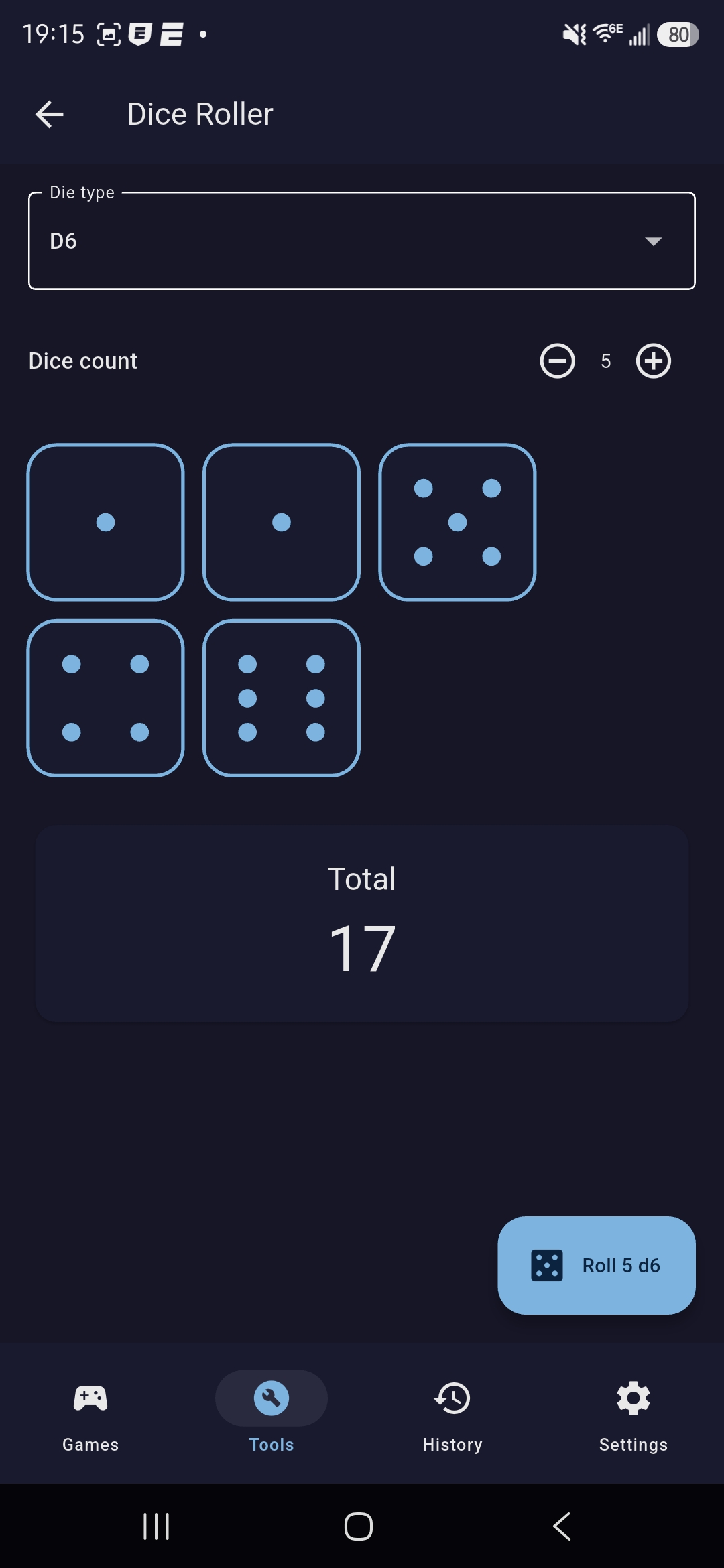
Every player rolls one die and the highest roll goes first. It is fair because each player has the same chance of rolling any number, and nobody's roll affects anyone else's.
Ties
If two or more players tie for the highest roll, only the tied players roll again. Everyone else is already out. Keep going until one player is ahead. The re-roll is fair because the tied players are back on equal terms.
Ties are common with a six-sided die: two players match one time in six. A 20-sided die cuts that to one in twenty.
Worked example: a full turn order from one roll
Dice can set the whole order, not just the first player. Rank everyone by their roll and re-roll only to separate players who tied.
| Player | First roll | Tie-break roll | Turn order |
|---|---|---|---|
| Ana | 5 | 4 | 1st |
| Raj | 2 | 4th | |
| Mia | 5 | 1 | 2nd |
| Leo | 3 | 3rd |
Ana and Mia tie on 5, so they are first and second in some order, and only those two roll again. Ana's 4 beats Mia's 1. Leo's 3 and Raj's 2 already put them third and fourth, so they don't roll again.
Flip a coin
For two players, one flips and the other calls heads or tails while the coin is in the air. Each side comes up half the time, and because the call is made after the coin leaves the hand, the flipper can't aim for a result.
Best of three
In a best of three, the first player to win two flips goes first. With a fair coin it gives each player exactly the same 50 percent chance as a single flip, so it isn't more fair. What it does is make the result feel less sudden, which is why people like it for deciding something that matters. Agree on "one flip" or "best of three" before the first flip, not after it.
If you don't trust the coin
Flip it twice. Heads then tails means player one goes first. Tails then heads means player two. If both flips match, start over. The two mixed results are equally likely even when the coin favors one side, so this is fair with any coin.
Three or more players
- Three players: odd one out. Everyone flips at once. If one coin differs from the other two, that player goes first. If all three match, flip again.
- Four players: a bracket. Pair up, flip within each pair, then the two winners flip against each other.

Spin a spinner
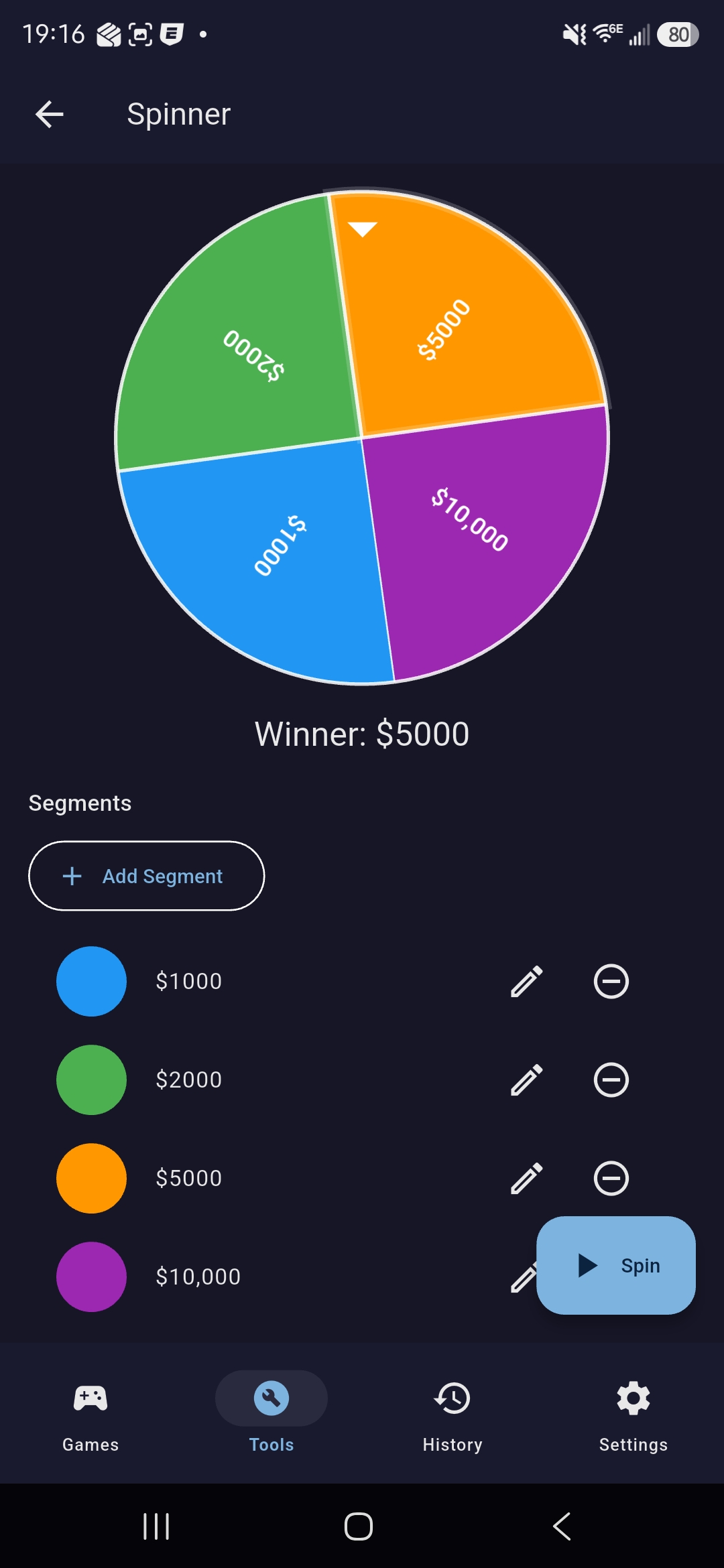
Give every player one segment of the same size and spin once. Whoever it lands on goes first. Equal segments mean equal chances, and one spin settles it with no ties, which makes a spinner the quickest method for a big group.
Two things keep it honest: the segments really must be the same size, and the spin has to be hard enough to go around several times. For a full turn order, play then passes clockwise from the first player, or spin again with that player's segment removed.
Other common methods
- Draw cards. Shuffle, then each player draws one card and the highest goes first. Say whether aces are high or low before anyone draws. Players who tie draw again. It is fair because a shuffled deck gives every player the same chance at any card.
- Draw names or straws. Put each name on a slip, mix them and draw one. The order the slips come out can be the whole turn order. Every slip is equally likely to be picked.
- Rock, paper, scissors. For two players. Each choice beats one option and loses to another, so no choice is better than the others. It isn't random, though: a player who reads the other's habits has an edge.
- The game's own rule. Many games name a method, such as cutting for low card to deal in cribbage, or throwing closest to the bull in darts. Use it when there is one.
When going first is an advantage
If you are playing more than one game, a fair draw for the first game is only half of it. Rotate the start for the games after: pass first turn to the left each game. Once the start has gone all the way around the table, everyone has had the same number of first turns.
Letting the loser of the last game go first is a different kind of rule. It doesn't share first turns equally, because a player who keeps losing keeps starting. It is a catch-up rule that hands the advantage to whoever is behind, so choose it for that reason, not for equal turns.